
Buyers Market Marketing: What the New Housing Data Means for Your Business
By Arizona Balloon Company (arizonaballoon.com) | August 6, 2026
Buyers Gain Leverage Across the Country
A new wave of housing data confirms what many sellers already suspect: the balance of power is tipping toward buyers, and buyers market marketing has become the phrase business owners need to understand. According to an analysis by Best Interest Financial and Clever Real Estate, the typical home is now selling below its list price in 41 of the 50 most populous U.S. metros. Detroit ranked as the most buyer-friendly market in the study, while Hartford, Connecticut offered sellers the strongest position. For home builders, brokers, and local businesses, this shift changes how properties, developments, and storefronts need to compete for attention. Companies that once relied on demand alone are now discovering that visibility drives decisions, a lesson the team at Arizona Balloon Company has watched play out across every softening market cycle.
A Market Divided by Region
The data shows a sharply divided national picture. Buyers are gaining the most leverage in Texas, Florida, and parts of the Midwest, while sellers in several Northeastern and coastal metros remain firmly in control. Eight of the fifteen metros with the largest year-over-year increases in price reductions were in the Midwest, including Cincinnati, Detroit, Indianapolis, and Kansas City. Yet price-drop activity actually declined year over year in 31 of the 50 metros analyzed, suggesting that buyer advantage may have already peaked in some regions even as it continues to build in others. That inconsistency means national headlines about a “buyer’s market” can be misleading for any single business trying to plan a local campaign. Builders and dealers exploring advertising balloons for site visibility are increasingly using that regional nuance to decide where and when to deploy outdoor marketing.
How Home Builders Are Responding
Homebuilders are not waiting passively for the market to turn in their favor. Broader industry reporting shows builders leaning heavily on price cuts and incentives, with a large share of builders offering closing cost assistance, mortgage rate buydowns, or design upgrades to bring buyers to the closing table. Separate research from J.P. Morgan notes that median home prices have climbed for 36 straight months even as new federal supply-side legislation attempts to ease long-term affordability pressure. In this environment, incentives alone are not enough. A model home tucked behind a fence, invisible from the main road, will not benefit from a price cut that no one drives by to see. Builders competing in the 41 buyer-favorable metros need every advantage to stand out from neighboring developments offering similar deals.
The New Challenge: Getting Buyers Through the Door
When sale-to-list ratios soften and days on market stretch longer, the businesses that win are the ones buyers actually notice. Longer listing times mean more competition for the same pool of shoppers, and that competition is increasingly visual. Real estate professionals are being advised to rely on current, local data rather than national assumptions, and the same logic applies to marketing: a static yard sign or a small window banner rarely competes with the volume of listings now on the market. Builders, agents, and dealers alike are rethinking how to physically stand out at street level, especially in metros where inventory has climbed to multi-year highs and buyers have more open houses to choose from on any given weekend.
Buyers Market Marketing: Where advertising balloons Fit In
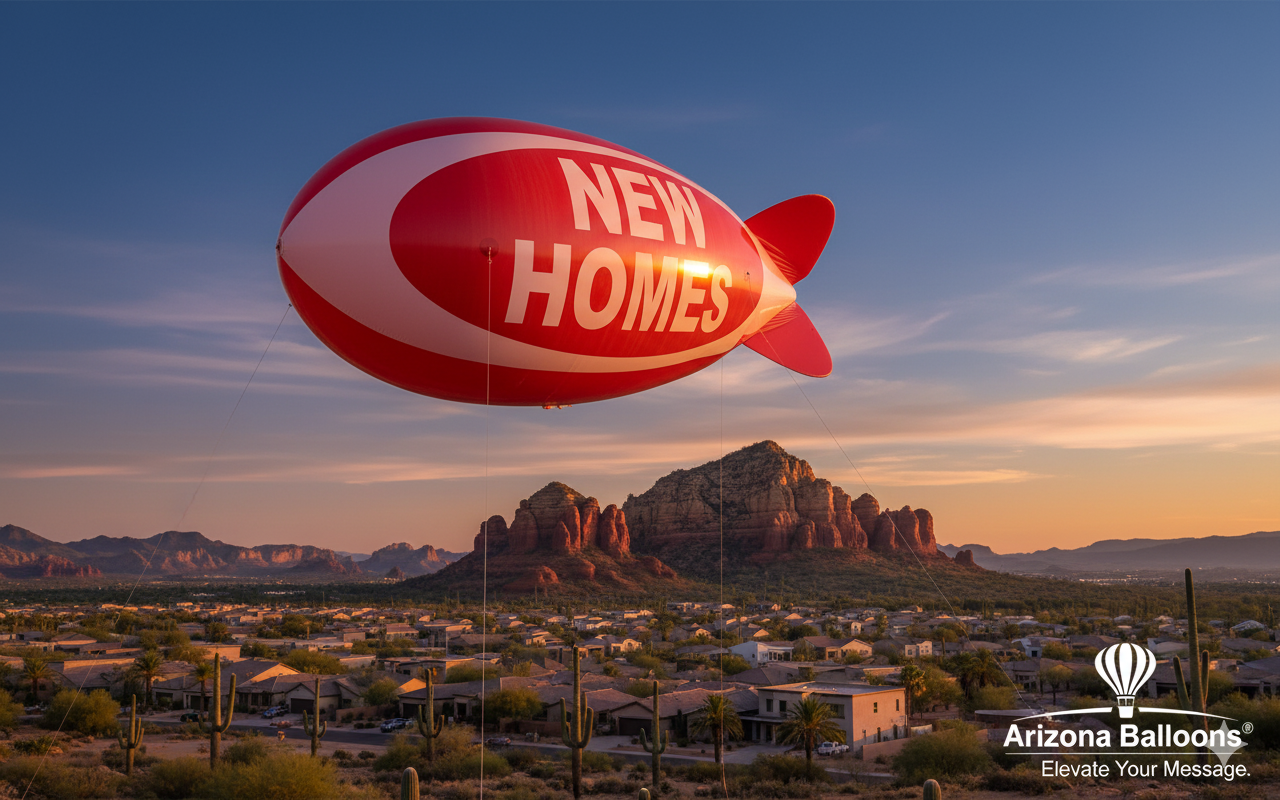
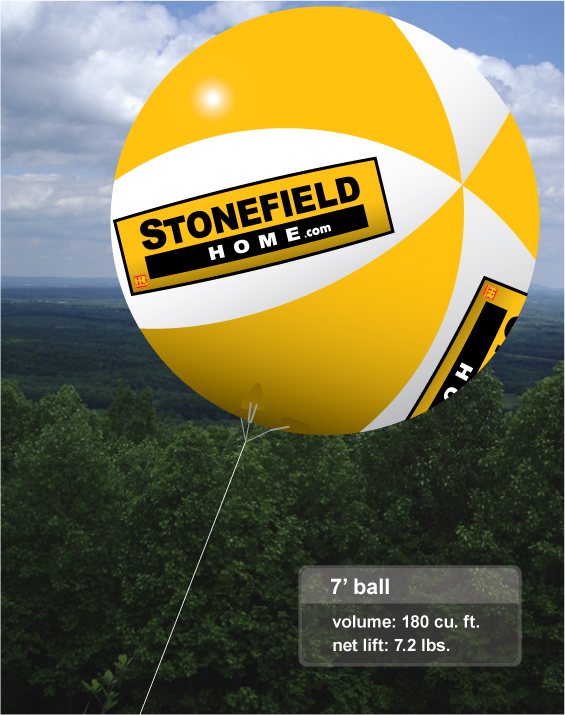
This is precisely where buyers market marketing tactics like helium advertising balloons and aerial marketing blimps earn their value. A giant inflatable balloon towering above a model home complex, a dealership lot, or a grand-opening event is visible from blocks away, something a printed sign simply cannot achieve. Home builders in softening markets are using tethered balloons and custom-shaped inflatables to mark active listings, flag weekend open houses, and pull passing traffic off the highway. Because buyers now have more listings to sift through, the properties that catch the eye first often get the first showing. Businesses researching marketing blimps for dealership and grand-opening events report that aerial visibility shortens the gap between a curious drive-by and an actual walk-in.
Beyond New Homes: Other Businesses Feel the Shift
The ripple effects of a buyer-favorable housing market extend well past home builders. Balloon and blimp rental companies are fielding more inquiries from real estate teams looking to differentiate open houses. Trade show exhibitors selling home services, mortgage products, or renovation supplies are leaning on inflatable displays to stand out at packed industry events tied to the housing slowdown. Auto dealers, who often see cross-shopping increase when consumers redirect discretionary spending away from home purchases, are using the same balloon and blimp strategies to capture attention on busy retail corridors. Even general businesses unrelated to housing are borrowing the same playbook, recognizing that in a crowded, price-sensitive market, being seen first is often the deciding factor.
What This Means for Your Marketing
For any business operating near the housing market right now, this data is a signal to invest in visibility rather than pull back. When buyers have more options and more time to decide, physical, location-based marketing becomes one of the most reliable ways to capture attention before a competitor does. Outdoor advertising that can be seen from a distance, such as helium advertising balloons positioned above a property or event, gives home builders, agents, and local businesses an edge that digital ads alone cannot replicate on a Saturday afternoon drive-by.
This strategy works especially well paired with the regional unevenness in the current market. Businesses in buyer-friendly metros like Detroit, Houston, or Indianapolis can use inflatable marketing to accelerate already-favorable foot traffic, while businesses in tighter seller’s markets can use the same tools to make a smaller number of available listings or promotions feel like must-see events.
Whichever side of the market a business is on, the underlying lesson is consistent: visibility converts interest into action. Companies exploring outdoor campaigns can review options for aerial marketing blimps to see how a single well-placed inflatable can extend the reach of a marketing budget during a shifting housing cycle.
Sources
- Buyers Gain Negotiating Power In 41 Major Housing Markets – National Mortgage Professional
- Here’s Where Your Clients Can Actually Negotiate on Price – Mortgage Professional America
- US Housing Market Outlook – J.P. Morgan Global Research
- Home Price Cuts Are Growing as Buyers Gain More Negotiating Power – NAR